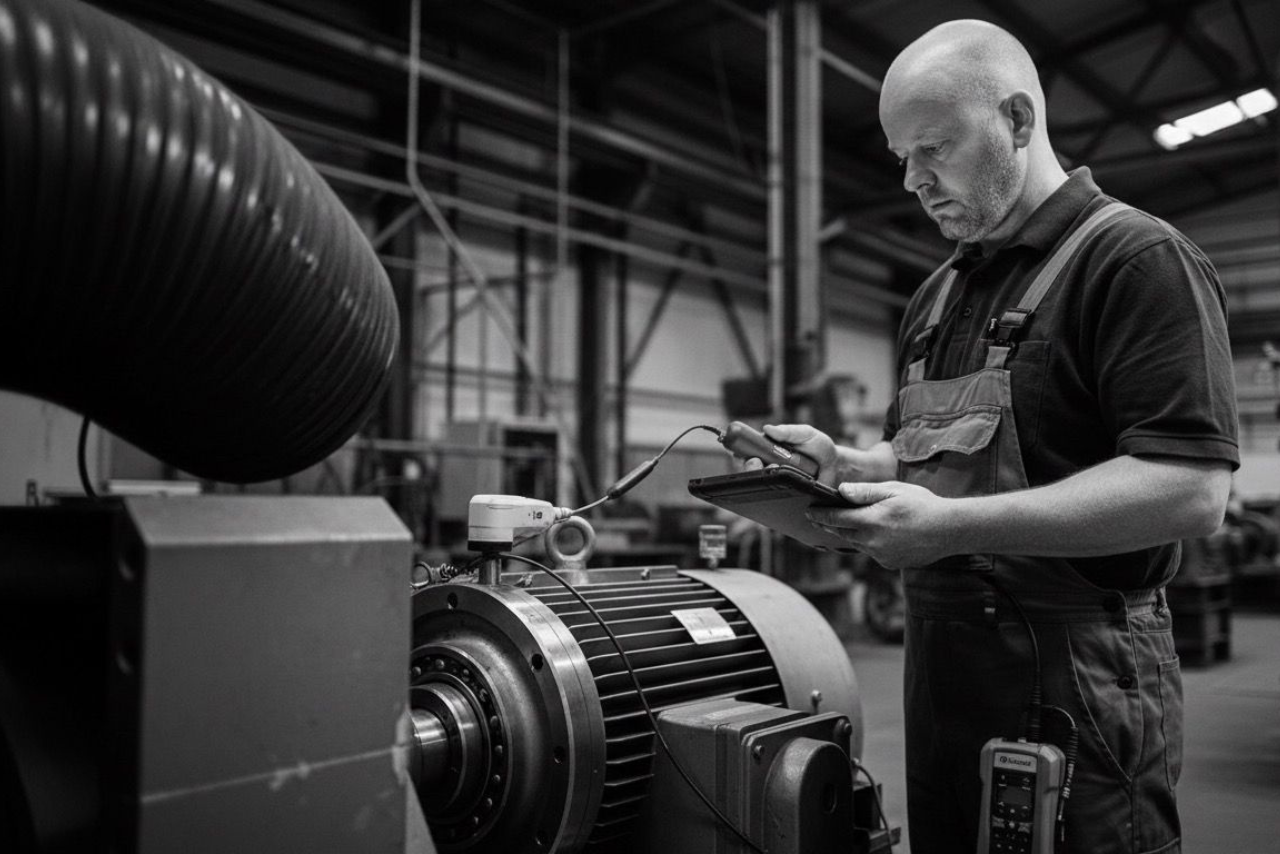
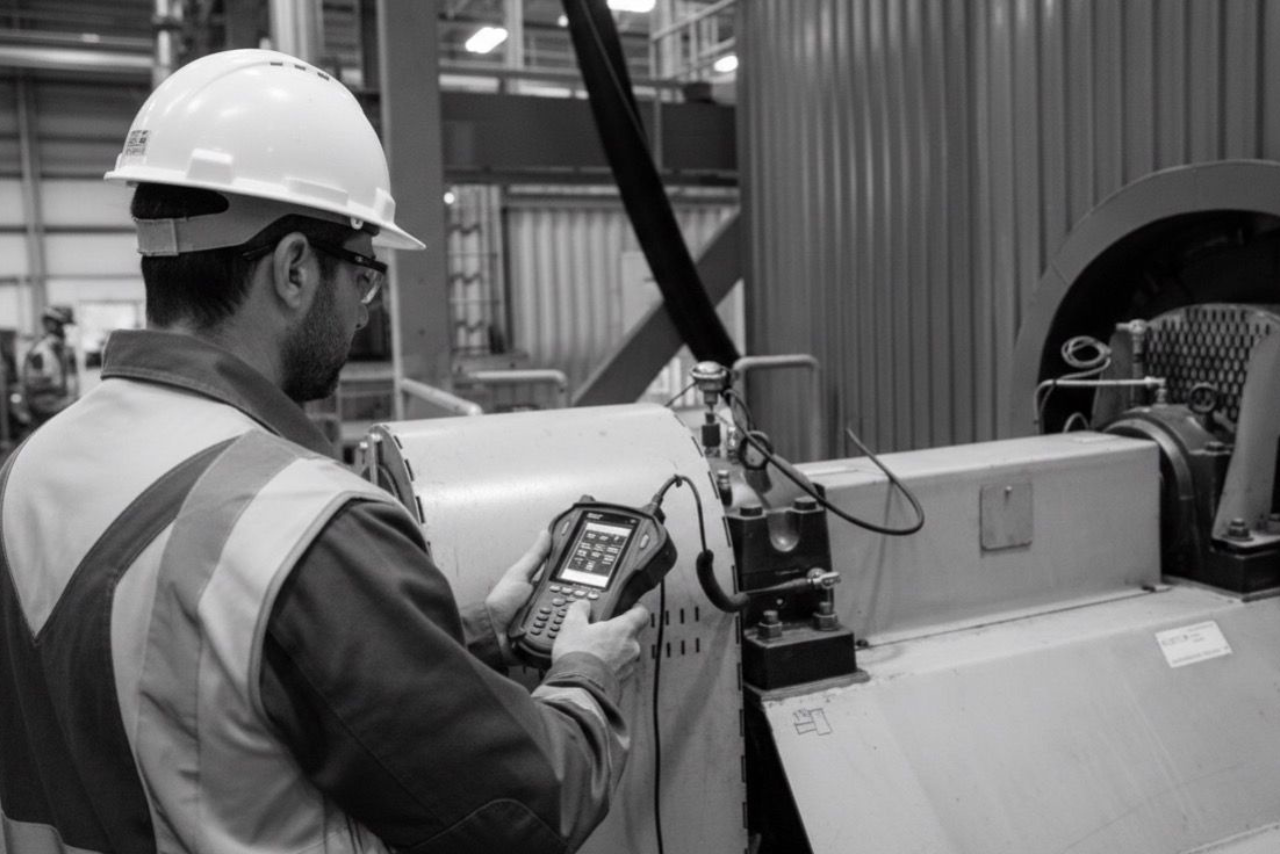
A highly skilled technician performs a comprehensive condition monitoring assessment on a large industrial electric motor operating in a demanding industrial environment. Utilizing advanced diagnostic tools and precision-calibrated instruments, the technician captures real-time vibration data directly from the bearing housing — a fundamental component in maintaining rotational equipment health. This proactive inspection approach ensures early detection of potential mechanical irregularities before they escalate into major operational
....View Morefailures, ultimately safeguarding production continuity and improving overall equipment reliability across critical operational systems.
Key Service Highlights:
• Bearing Health Monitoring: Since bearings are the primary point of wear in rotational systems, specialized sensors are used to detect early signs of fatigue, pitting, surface degradation, or lubrication breakdown.
• Data-Driven Diagnostics: The technician uses a handheld analyzer interfaced with a tablet to visualize vibration frequency spectra in real time, enabling immediate identification of imbalance, shaft misalignment, resonance, or structural looseness.
• Proactive Asset Management: By identifying microscopic changes in rotational behavior before catastrophic failure occurs, these services significantly reduce unplanned downtime, lower maintenance costs, and extend the operational lifespan of critical machinery.
• Precision Measurement: The integration of digital data collection with detailed physical inspection ensures each rotation meets strict performance, safety, and reliability standards.Less
An engineer works at a high-end CAD workstation, meticulously refining a 3D digital twin of a complex gear assembly. At the core of this advanced mechanical design lies the bearing — a critical component that directly influences system efficiency, load capacity, and long-term operational reliability. Through sophisticated simulation tools and precision modeling, the engineer evaluates how rotational forces interact within the assembly, ensuring that each component functions seamlessly under demanding industrial conditions.
....View Morewhile maintaining optimal performance and mechanical stability across high-load applications.
Core Engineering Focus:
• Precision Bearing Selection: Application engineering requires careful calculation of radial and axial load conditions to determine the most suitable bearing type. Engineers often evaluate options such as tapered roller bearings or high-precision ball bearings to ensure maximum durability and operational efficiency.
• Rotational Optimization: The mechanical design focuses on minimizing friction, vibration, and thermal buildup. By optimizing contact surfaces and lubrication paths, the assembly can sustain high-speed rotations without excessive wear or premature mechanical failure.
• Integrated Design Workflow: The presence of advanced prototyping tools such as 3D printers indicates a rapid development environment. Digital models are quickly transformed into physical prototypes, allowing engineers to test real-world fit, alignment, and performance before final production.
• Mechanical Synergy: Special attention is given to the alignment between the bearing housing and the shaft assembly. Even microscopic deviations in tolerance can lead to vibration, noise, or reduced service life, making precision alignment a crucial step in rotational equipment design.Less
Bearings Technical Consultancy & Engineering Support
Two engineering consultants engage in a deep-dive analysis of machinery performance data inside a high-tech command center. This collaborative environment represents the core of Technical Consultancy, where complex operational information is carefully evaluated to improve industrial reliability. In this process, the bearing is not viewed as just another mechanical component, but rather as a vital indicator that reflects the overall health, efficiency, and stability of the entire rotating system.
....View MoreBy interpreting performance trends and diagnostic signals, consultants can detect potential weaknesses long before they escalate into costly equipment failures.
Consultancy Service Pillars:
• Root Cause Analysis (RCA): Engineering consultants closely examine real-time machinery data to determine the underlying reasons behind premature bearing wear or performance degradation. This process involves evaluating vibration signatures, thermal behavior, rotational stability, and load distribution patterns.
• Lifecycle Extension Strategies: By analyzing historical performance records displayed across advanced monitoring systems, consultants recommend optimized lubrication intervals, improved sealing solutions, and enhanced installation practices designed to significantly extend the operational lifespan of critical bearings.
• System Optimization: Technical consultancy goes beyond individual components. Experts assess the complete mechanical ecosystem surrounding the bearing, including shaft alignment, housing tolerances, structural support, and environmental protection to ensure the system operates at maximum efficiency.
• Knowledge Transfer: A key aspect of consultancy is translating complex analytical insights into practical engineering solutions. Consultants provide maintenance teams and engineers with clear strategies, training, and recommendations that improve long-term equipment reliability and operational decision-making.Less
Bearings Root Cause Analysis & Forensic Engineering
Two technical specialists perform a detailed physical and digital inspection of a large-diameter ball bearing that has been removed from service after a suspected performance failure. This stage represents a critical Root Cause Analysis process where engineers carefully study the physical condition of the component while correlating their observations with historical operational data. By comparing real-world wear patterns with machine performance records, the specialists can accurately determine the underlying factors that led to the bearing's failure.
....View MoreThis investigative approach ensures that replacement components are installed with improved reliability and optimized operating conditions.
Key Stages of the RCA Process:
• Evidence Examination: The specialists carry out a thorough visual and tactile inspection of the bearing races, rolling elements, and cage structures. They search for characteristic failure patterns such as spalling, brinelling, surface cracking, or electrical erosion that indicate specific operational stresses.
• Digital Integration: Using advanced diagnostic tools and digital monitoring records, engineers compare the observed damage with vibration data, thermal history, and machine operating conditions. This comparison helps identify whether the failure originated from improper installation, lubrication deficiencies, misalignment, or sudden load fluctuations.
• Material & Chemical Analysis: In many cases, laboratory testing is conducted to further validate the findings. This may include grease contamination analysis, lubricant degradation testing, or metallurgical examinations that reveal material fatigue, overheating, or structural weaknesses within the bearing components.
• Preventative Reporting: The final outcome of the Root Cause Analysis is a comprehensive technical report that outlines the exact cause of failure along with recommended corrective actions. These recommendations may include improved sealing systems, revised lubrication intervals, or mechanical design adjustments to ensure the replacement bearing achieves its full operational lifespan.Less
Bearings Maintenance Strategy & Asset Care
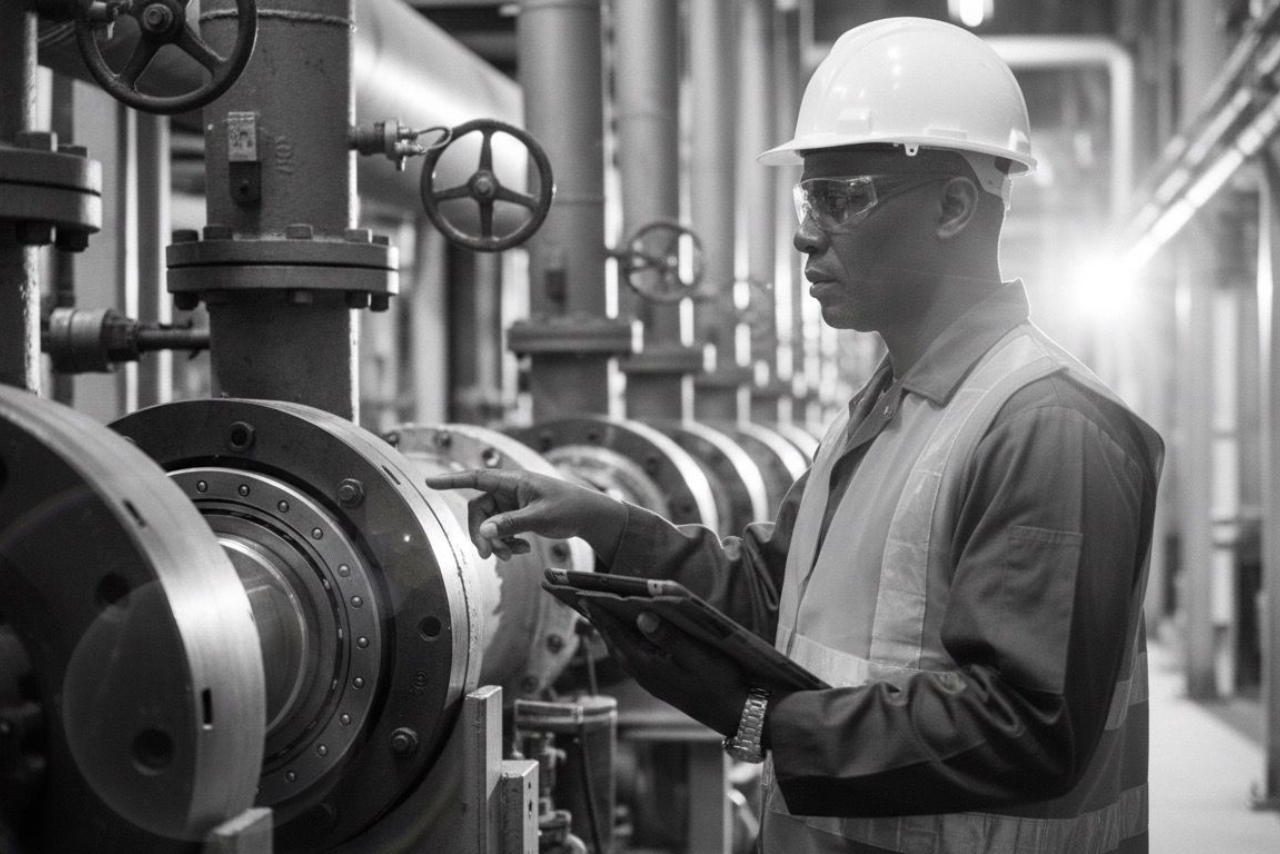
A technician wearing protective gear conducts an on-site inspection of a series of large industrial pumps operating within a demanding production facility. This scenario represents a modern Maintenance Strategy where the bearing is treated as the primary indicator of overall system health. Instead of relying on reactive repairs after a failure occurs, engineers and maintenance teams implement structured monitoring processes that identify performance changes early and maintain operational stability.
....View MoreThis proactive approach allows organizations to prevent unexpected equipment breakdowns while improving the reliability and longevity of critical machinery across industrial operations.
Strategic Maintenance Pillars:
• Condition-Based Monitoring: The technician records real-time inspection observations and machine sensor readings using a digital tablet directly at the equipment interface. This method allows maintenance teams to detect early signs of wear or imbalance and schedule service only when the equipment condition truly requires it.
• Lubrication Management: Effective lubrication is one of the most critical factors in extending bearing life. Maintenance strategies focus on selecting the correct lubricant type, applying the proper quantity, and maintaining accurate lubrication intervals to prevent overheating, contamination, and premature wear.
• Precision Installation and Alignment: Proper mounting techniques and precise shaft alignment play a major role in minimizing vibration and mechanical stress. Well-maintained piping systems, housings, and support structures help ensure smooth rotation and reduce the likelihood of parasitic loads affecting the bearing assembly.
• Digital Integration: Modern maintenance programs integrate machine monitoring systems with centralized maintenance management platforms. This digital connection enables long-term trend analysis, allowing operators to estimate the remaining useful life (RUL) of critical bearings and plan maintenance during scheduled downtime.
• Safety and Compliance: The use of personal protective equipment (PPE) and standardized inspection procedures ensures that maintenance tasks are performed safely while meeting strict operational and regulatory standards across industrial facilities.Less
Asset Management & Facility Reliability
A facility manager, equipped with protective gear and a digital tablet, oversees a large-scale industrial floor where numerous machines operate simultaneously. This environment reflects the core principles of modern Asset Management, where critical components such as bearings are treated as high-value assets within a larger operational ecosystem. Through continuous monitoring and digital tracking systems, managers ensure that every mechanical component contributes to stable production and long-term equipment reliability.
....View MoreThis structured approach allows organizations to maintain maximum uptime while optimizing operational efficiency across complex industrial environments.
Key Pillars of Asset Management:
• Lifecycle Tracking: Effective asset management requires monitoring each bearing from procurement and installation to its final decommissioning stage. Digital asset systems allow engineers to record installation details, maintenance history, and performance data to maintain a complete lifecycle record.
• Predictive Resource Allocation: By analyzing performance data across multiple machines, facility managers can forecast when certain bearings or rotating components will require service. This predictive approach improves spare parts planning and minimizes unnecessary inventory costs.
• Risk Mitigation: A strong asset management strategy identifies critical machines where bearing failure could result in significant production loss or safety hazards. These high-risk assets receive prioritized inspections, enhanced monitoring, and premium replacement components.
• Data-Driven Decision Making: Integrating field observations with centralized maintenance databases allows organizations to shift from reactive maintenance toward predictive and reliability-based strategies that improve long-term operational planning.
• Operational Visibility: Effective asset management provides a comprehensive overview of plant performance, enabling managers to identify small mechanical irregularities early and prevent them from escalating into major system-wide shutdowns.Less
A warehouse professional, equipped with a safety helmet and high-visibility vest, manages a high-density storage aisle using a handheld barcode scanner and digital tablet. This scene reflects the foundation of modern Inventory Management, where physical organization is seamlessly integrated with digital tracking systems. In this structured environment, bearings are treated as critical supply chain assets that directly impact maintenance efficiency and operational readiness.
....View MoreThrough accurate monitoring and systematic storage practices, facilities ensure that essential components are available exactly when needed without unnecessary surplus or delays.
Core Inventory Management Pillars:
• Real-Time Stock Visibility: Mobile barcode scanning technology enables instant updates to centralized inventory databases. This ensures accurate tracking of bearing quantities, specifications, and storage locations, reducing the risk of unexpected stock shortages during urgent maintenance operations.
• Optimized Storage Conditions: Precision bearings require carefully controlled storage environments to prevent contamination, corrosion, or vibration-related damage. Organized racking systems and climate-aware storage practices protect component integrity until deployment.
• Traceability and Compliance: Digital logging systems maintain a complete traceable history for each item, including manufacturer batch numbers and delivery dates. This documentation supports warranty validation and enables rapid corrective action if defects are identified.
• Lean Resource Allocation: By analyzing usage trends and stock movement data, inventory managers can differentiate between high-demand and slow-moving items. This enables Just-in-Time (JIT) strategies that lower carrying costs while maintaining operational preparedness.
• Order Fulfillment Accuracy: Structured picking and scanning procedures ensure that the correct bearing size, load rating, and seal configuration reach maintenance teams, preventing costly installation errors and minimizing operational disruptions.Less
Bearings Lubrication & Tribology Management
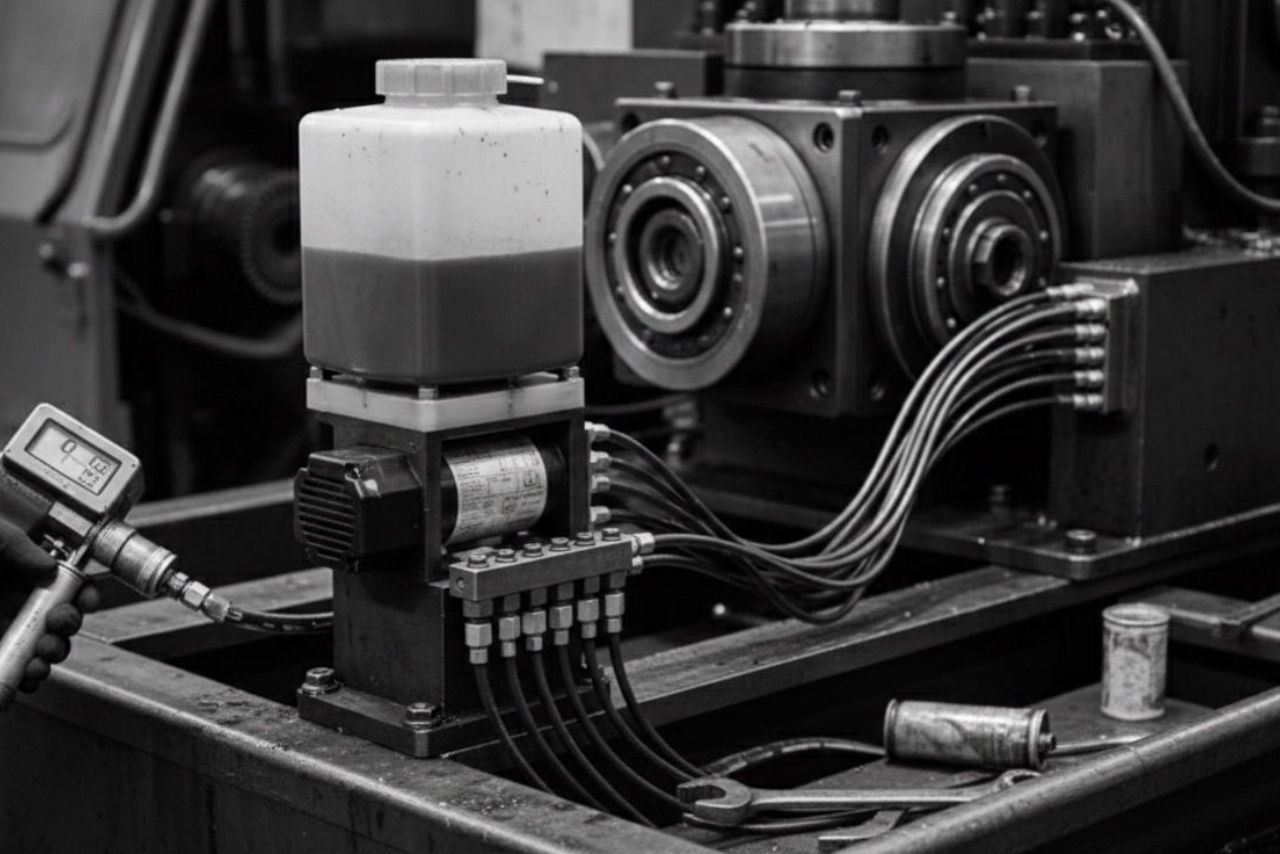
A technician utilizes a digital acoustic or flow-metering grease gun to service an automated lubrication system connected to multiple bearing housings across an industrial setup. This configuration represents a structured Lubrication Management strategy where precision, timing, and lubricant quality directly influence bearing reliability. By ensuring accurate lubricant delivery, facilities significantly reduce friction-related wear and extend the operational lifespan of critical rotating equipment.
....View MoreThis controlled and data-driven approach minimizes unexpected failures while improving overall mechanical efficiency and long-term asset performance.
Core Management Pillars:
• Precision Delivery: The digital metering tool guarantees that each bearing receives the exact required lubricant volume. This prevents under-lubrication, which leads to metal-to-metal contact, as well as over-lubrication that can cause internal churning, overheating, and seal damage.
• Centralized Distribution: The integrated manifold system enables simultaneous lubrication of multiple bearing points, ensuring uniform grease distribution and reducing the risk of missed service intervals or manual inconsistencies.
• Contamination Control: Sealed reservoirs and filtered supply lines protect lubricants from moisture, dust, and airborne industrial contaminants. This safeguards internal rolling elements from abrasive particles that can accelerate wear.
• Condition-Based Intervals: Modern lubrication programs integrate vibration and thermal monitoring data to dynamically adjust service frequency. This shifts maintenance from rigid time-based schedules to optimized condition-driven intervals.
• Proactive Maintenance: Maintaining a consistent lubricant film addresses the root cause of a majority of premature bearing failures. By preventing friction-related damage, facilities lower maintenance costs and significantly reduce total cost of ownership (TCO).Less
Two reliability engineers collaborate on-site to analyze vibration and thermal performance data from a large-scale industrial motor operating under demanding load conditions. This environment reflects the foundation of modern Condition Monitoring, where bearings are treated as intelligent diagnostic sources rather than simple mechanical parts. By continuously interpreting machine signals, engineers can detect early warning indicators that enable planned corrective action instead of costly emergency breakdowns.
....View MoreThis proactive monitoring approach strengthens equipment reliability while reducing unexpected downtime and maintenance costs across critical operations.
Key Service Components:
• Vibration Signature Analysis: Using advanced diagnostic tablets and spectrum analysis tools, engineers evaluate frequency patterns to identify specific bearing defects such as outer-race spalling, inner-race damage, or cage deterioration. Isolating these fault frequencies provides a clear picture of internal rolling element condition.
• Thermal Imaging & Monitoring: Continuous temperature tracking helps detect lubrication breakdown, excessive friction, or abnormal loading. A gradual rise in bearing temperature is often the first measurable indicator of mechanical distress.
• Real-Time Data Integration: Current machine readings are compared against historical baseline data to identify performance deviations. This long-term trend analysis is essential for estimating the Remaining Useful Life (RUL) of critical bearing assets.
• Non-Invasive Diagnostics: Condition monitoring assessments are conducted while machinery remains fully operational. This eliminates unnecessary shutdowns and ensures that maintenance interventions are scheduled strictly based on actual equipment condition.
• Expert Interpretation: Advanced monitoring systems are only as effective as the engineers interpreting the data. Skilled reliability specialists translate complex vibration and thermal signals into clear, actionable maintenance strategies tailored to the facility’s operational needs.Less
Vibration Analysis for Bearing Diagnostics
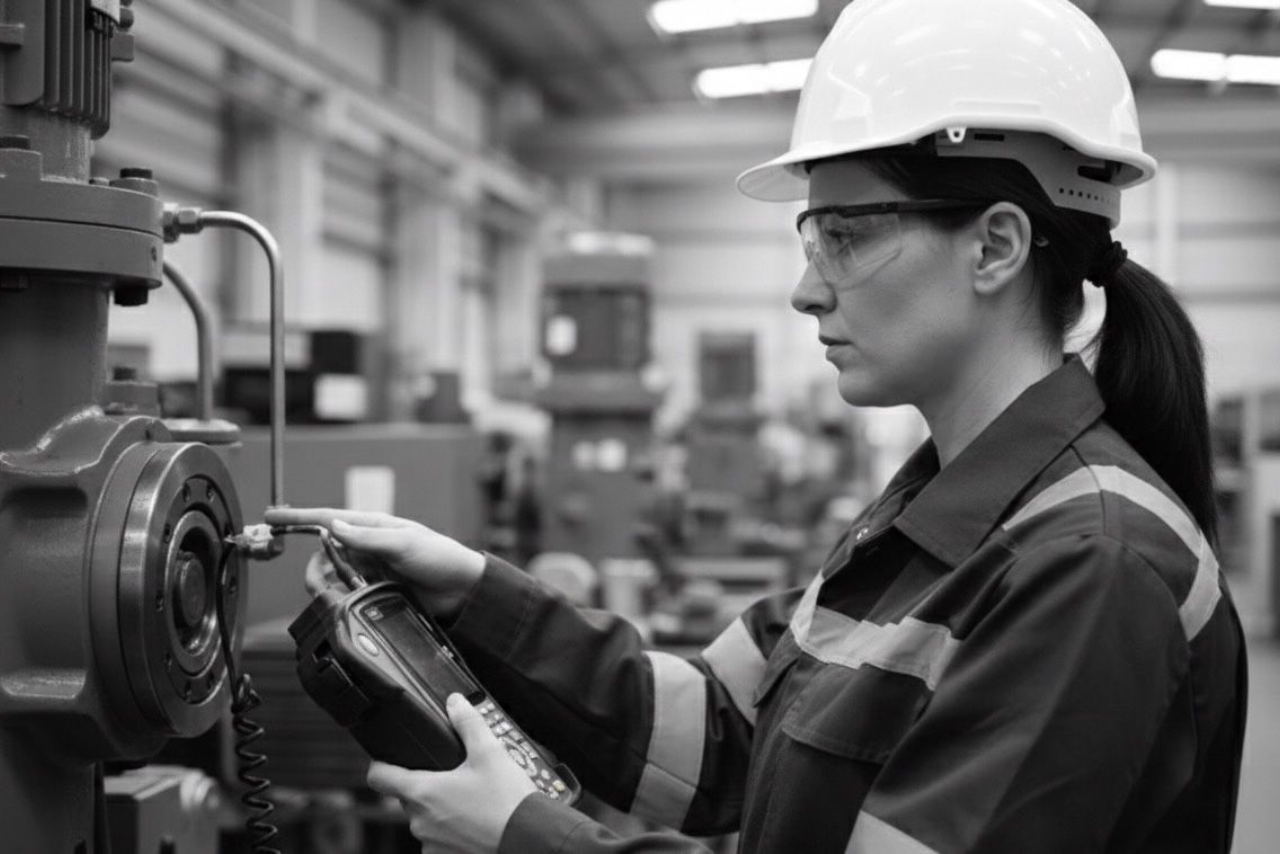
A reliability technician, equipped with a safety helmet and protective eyewear, performs advanced vibration diagnostics on an industrial pump housing operating under full production load. By securely placing a high-frequency magnetic accelerometer on the bearing’s load zone, the technician captures the machine’s unique mechanical signature. This data-driven approach enables early detection of microscopic bearing defects before they evolve into critical mechanical failures or unexpected downtime.
....View MoreThrough precise signal analysis and expert interpretation, reliability teams transform raw vibration data into actionable maintenance strategies that protect high-value rotating assets.
Core Technical Pillars:
• Detection of Early-Stage Faults: High-frequency vibration monitoring can identify bearing failure modes such as outer race spalling, inner race cracking, rolling element defects, or cage instability long before they produce audible noise or measurable temperature increases.
• Frequency Spectrum Interpretation: The handheld analyzer converts time-domain vibration signals into a Fast Fourier Transform (FFT) frequency spectrum. Technicians identify characteristic fault frequencies that correspond to the bearing’s geometry and rotational speed.
• Trend Analysis & Predictive Health: Current vibration readings are compared against ISO standards and historical baseline data to evaluate equipment condition and estimate the Remaining Useful Life (RUL) of the bearing.
• Root Cause Differentiation: Advanced diagnostics allow engineers to distinguish between internal bearing wear and external mechanical issues such as shaft misalignment, imbalance, looseness, or structural resonance.
• Non-Invasive Monitoring: The inspection process is conducted while machinery remains fully operational, ensuring that maintenance decisions are based on real-time performance data rather than routine time-based schedules.Less
Thermography & Infrared Thermal Analysis
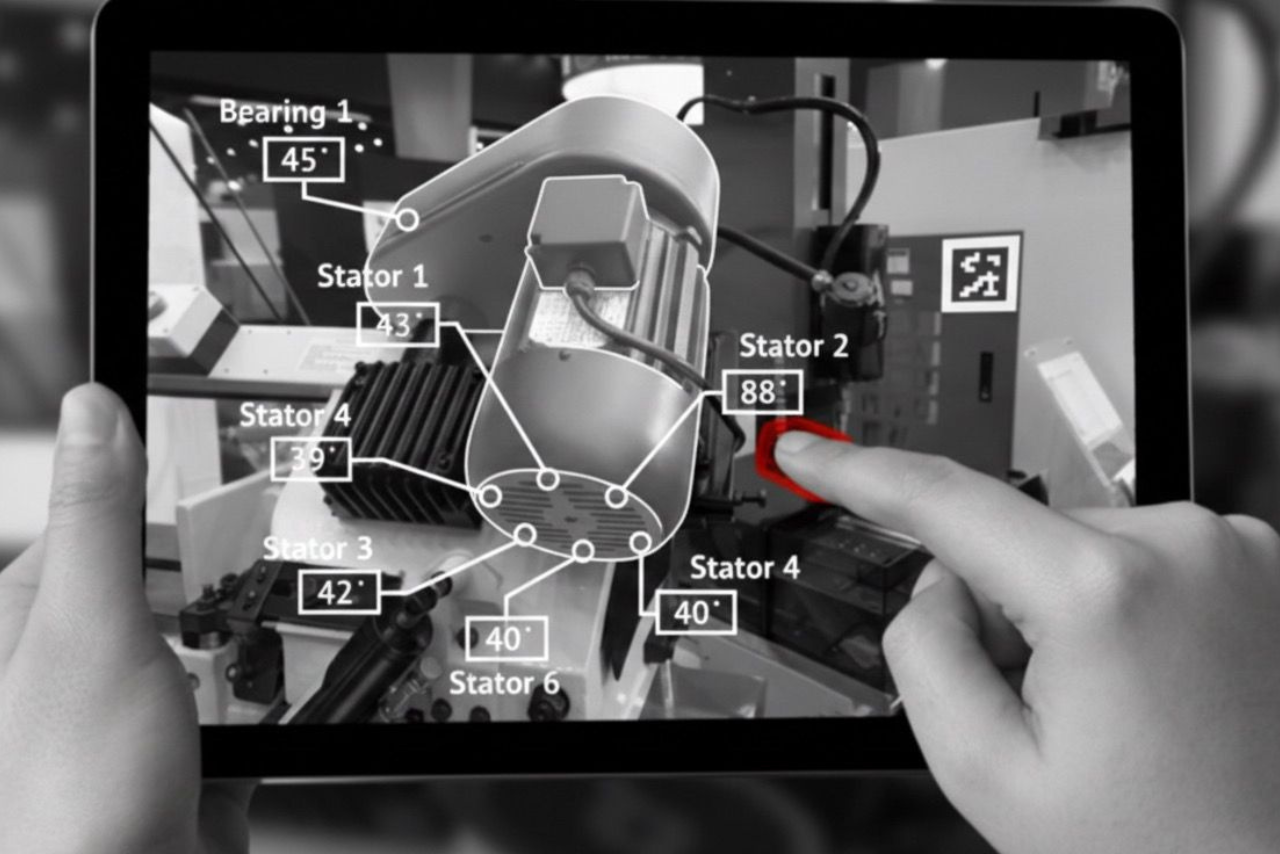
An operator uses a mobile tablet to visualize an Augmented Reality (AR) thermal overlay on an operating electric motor and its associated bearing housings. This advanced Thermography approach enables technicians to instantly detect abnormal heat patterns directly on the physical asset. By monitoring temperature variations in real time, engineers can identify early signs of friction, misalignment, or lubrication breakdown before they escalate into severe mechanical failures.
....View MoreThis intelligent fusion of digital diagnostics and physical inspection enhances maintenance accuracy while reducing unplanned operational downtime.
Core Technical Pillars:
• Real-Time Heat Mapping: The AR-enabled tablet displays precise temperature readings at critical points, such as bearing housings and motor components, offering a non-invasive thermal gradient analysis across the machine’s surface.
• Early Friction Detection: Thermal imaging highlights subtle heat anomalies that often serve as the earliest indicators of bearing distress, allowing intervention long before vibration spikes or audible mechanical noise develop.
• Stator and Housing Analysis: Beyond bearings, thermographic monitoring evaluates stator windings and motor housings, helping technicians differentiate between electrical overheating and mechanical friction-related issues.
• Augmented Reality Integration: By overlaying digital temperature data directly onto the physical equipment, AR systems minimize human identification errors and clearly pinpoint the exact component requiring attention.
• Comparative Diagnostics: Recorded thermal readings are compared against manufacturer specifications and historical baselines to determine whether equipment remains within a safe thermal operating envelope or requires corrective maintenance.Less
Bearings Lubrication Analysis & Tribological Health
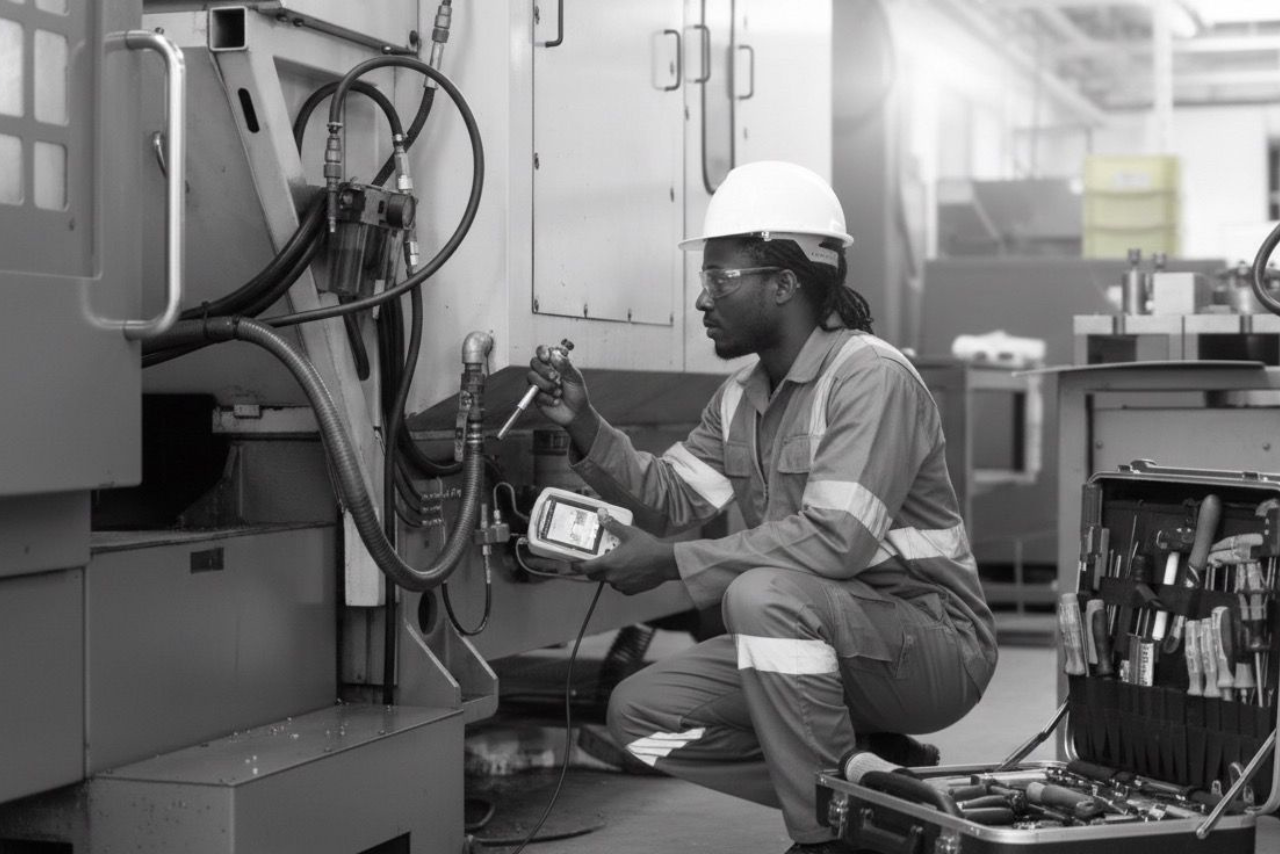
A specialized technician, equipped with advanced diagnostic instruments and a comprehensive mobile toolkit, performs an on-site extraction and evaluation of a lubricant sample from a complex industrial machine. This procedure forms the core of modern Lubrication Analysis, where oil or grease condition acts as a “liquid window” into the internal health of critical bearing components. By examining lubricant properties and contamination levels, engineers gain early insight into wear patterns and mechanical stress occurring inside the system.
....View MoreThis data-driven methodology enables proactive maintenance decisions that prevent costly equipment failures and extend bearing service life.
Core Analytical Components:
• Contamination Detection: Laboratory and field analysis identifies the presence of dust, moisture, or chemical contaminants that can degrade the lubricant film and accelerate internal bearing wear under operational loads.
• Wear Particle Analysis (Ferrography): Microscopic examination of suspended metallic particles reveals specific failure modes such as fatigue spalling, abrasive wear, or surface distress long before vibration or thermal anomalies become evident.
• Chemical Stability Testing: The evaluation measures oxidation levels, additive depletion, and viscosity changes to determine the remaining useful life of the lubricant, ensuring optimal fluid-film protection for rolling elements.
• Precision Sampling Technique: Using calibrated probes and controlled extraction points, technicians collect representative samples from active flow zones, eliminating misleading data from stagnant reservoir areas.
• Predictive Maintenance Integration: Lubrication analysis findings are integrated with vibration, thermal, and operational monitoring data to create a comprehensive machine health profile and enable precisely scheduled oil changes or component interventions.Less
Bearings Mounting & Dismounting Services
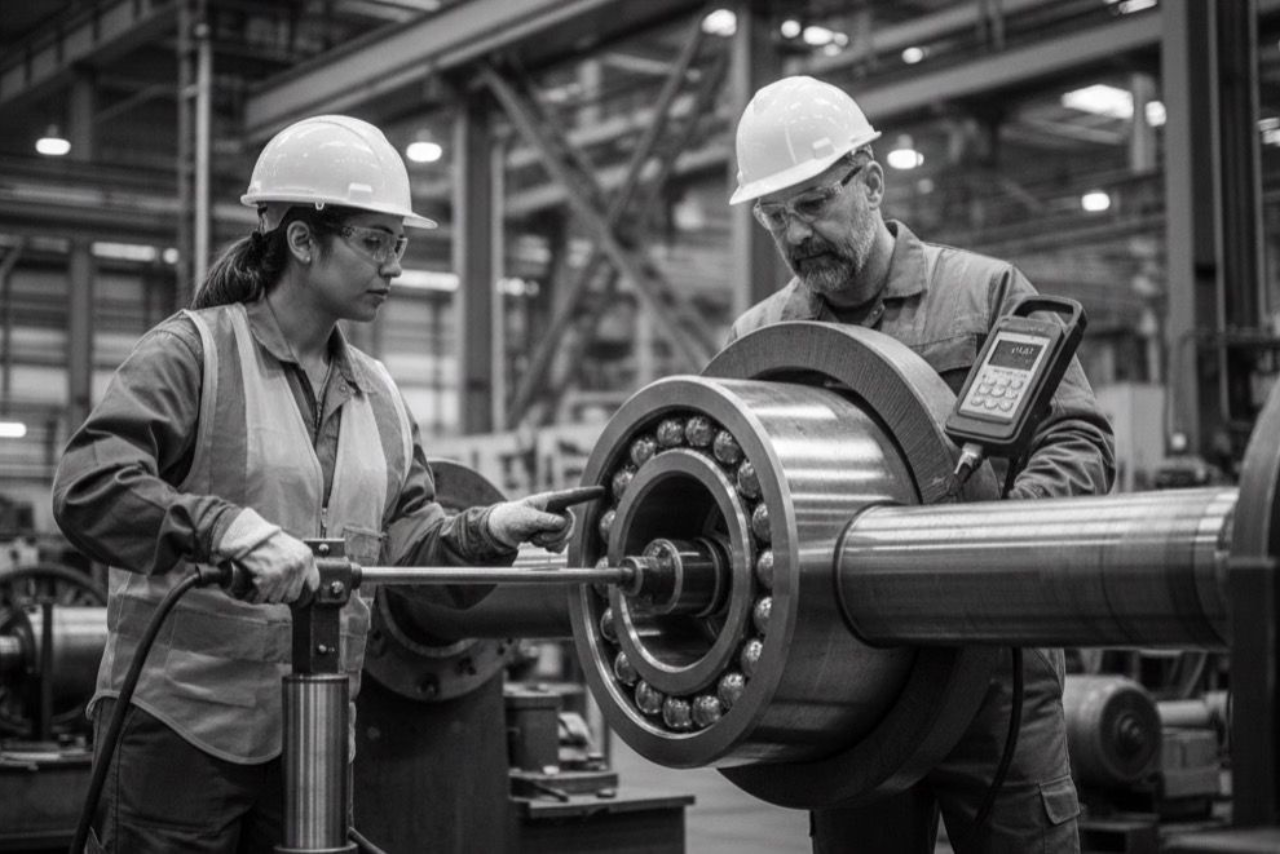
Two maintenance specialists carefully collaborate to install a large-diameter ball bearing onto a precision-ground shaft within an industrial environment. This operation reflects the foundation of professional Mounting and Dismounting Services, where proper handling techniques and controlled force application are critical to ensuring bearing longevity. Incorrect installation methods can lead to premature “infant mortality,” internal race damage, or misalignment that significantly reduces operational life.
....View MoreBy applying industry-approved procedures and precision tooling, technicians safeguard both the bearing and surrounding components during installation and removal processes.
Key Service Highlights:
• Controlled Force Application: A specialized mounting tool is used to apply uniform axial pressure across the bearing surface. This prevents uneven loading or “cocking,” which could cause immediate internal raceway damage or operational imbalance.
• Specialized Tooling: The use of calibrated hydraulic pumps and precision installation kits ensures that mounting forces are carefully monitored. Achieving the correct interference fit is essential to maintain shaft integrity without overstressing the bearing material.
• Professional Collaboration: Installing large-diameter bearings often requires synchronized teamwork to guide alignment and positioning, ensuring the bearing seats perfectly against the shaft shoulder.
• Damage Prevention: Professional mounting techniques may include controlled heating methods, such as induction heaters, to safely expand the inner ring. This eliminates the need for high-impact tools that can cause brinelling or surface deformation.
• Efficiency and Safety: During dismounting, mechanical or hydraulic pullers are utilized to remove bearings without damaging the shaft or housing. This approach preserves component integrity and ensures a seamless transition to replacement parts.Less
Bearings Alignment & Laser Shaft Verification
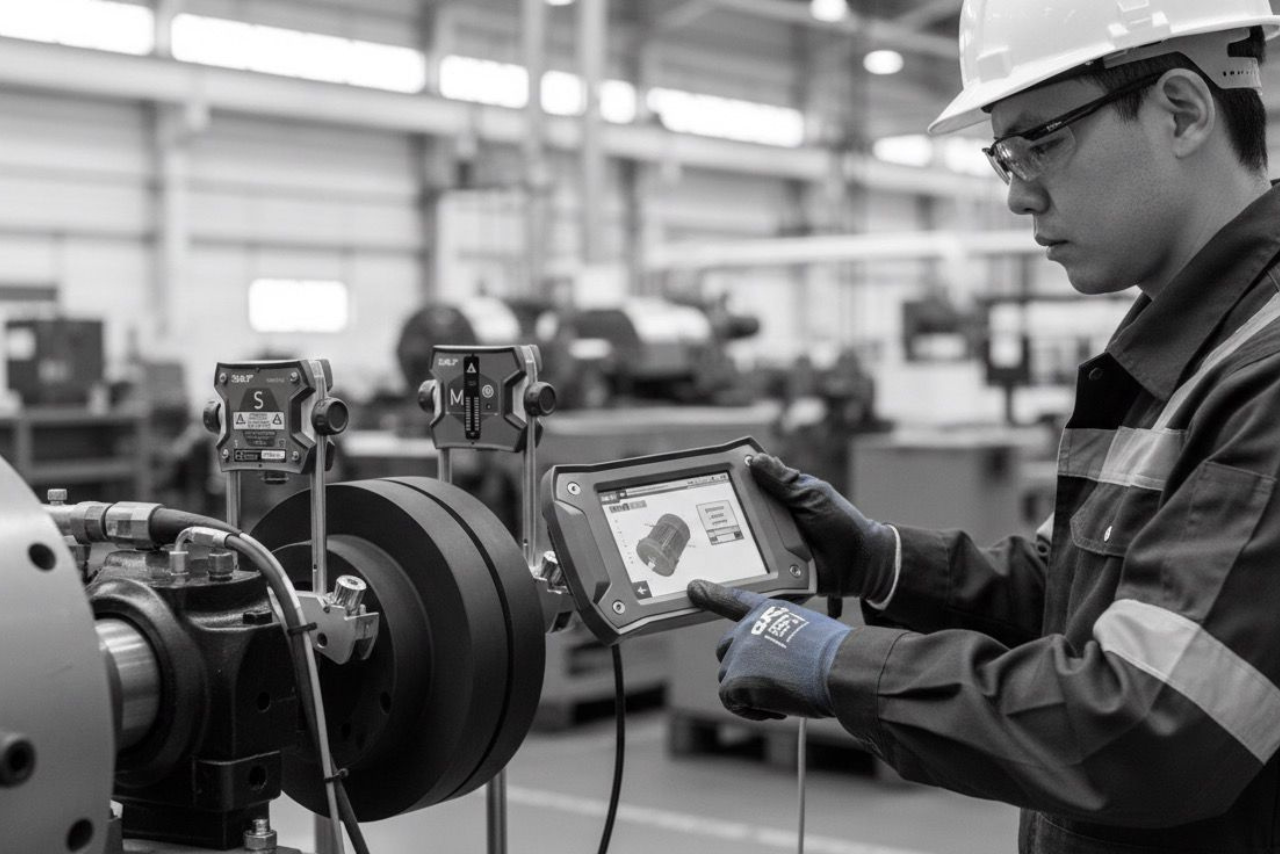
A technician, equipped with a safety helmet and protective eyewear, utilizes a state-of-the-art laser alignment system to precisely calibrate an industrial motor assembly. This critical alignment service ensures that rotational components operate within exact mechanical tolerances. Even minor angular or parallel misalignment can introduce parasitic loads that drastically shorten bearing life, increase vibration levels, and elevate overall energy consumption within the system.
....View MoreBy applying high-precision laser diagnostics, technicians optimize machine performance while protecting bearings and connected assets from premature mechanical stress.
Core Alignment Service Highlights:
• Laser-Guided Precision: Advanced laser sensors mounted on the coupling transmit real-time alignment data to a digital interface, delivering sub-micron accuracy that significantly surpasses traditional dial-indicator methods.
• Vibration and Heat Reduction: Proper shaft alignment ensures uniform load distribution across bearing rolling elements, eliminating excessive vibration and frictional heat that commonly lead to premature bearing failure.
• Energy Efficiency Optimization: When motors and driven equipment such as pumps or fans are precisely aligned, rotational resistance is minimized, reducing energy consumption and lowering the facility’s operational carbon footprint.
• Dynamic Correction: The technician performs real-time mechanical adjustments while monitoring instant digital feedback, enabling accurate “live moves” that streamline the alignment process.
• Extended Asset Reliability: Professional alignment services form a critical component of proactive maintenance strategies, ensuring bearings and rotating assemblies achieve or exceed their designed operational lifespan.Less
Dynamic Balancing for Industrial Rotational Assets
A reliability technician, equipped with a safety helmet and high-visibility vest, utilizes a state-of-the-art portable vibration analyzer and dynamic balancer to calibrate a large industrial centrifugal fan assembly. This specialized balancing service ensures that rotating components operate smoothly within their designed tolerances. Even a slight mass imbalance can generate powerful centrifugal forces that accelerate bearing wear, induce structural fatigue, and produce excessive operational noise.
....View MoreBy performing precise in-field corrections, technicians enhance equipment stability, reduce mechanical stress, and significantly extend system lifespan.
Core Balancing Service Highlights:
• Dynamic In-Situ Balancing: The analysis is conducted while the machine operates under normal load conditions. This method accounts for the full system dynamics—including shaft, coupling, and bearing interactions—delivering more accurate results than standalone workshop balancing.
• Precision Mass Correction: Advanced digital sensors measure vibration phase and amplitude to locate the exact heavy spot on the rotating element. Controlled weight adjustments are then applied to meet ISO 1940-1 balancing quality standards.
• Bearing Protection: Proper balancing eliminates parasitic radial forces that cause excessive loading on bearings. This prevents the repetitive impact or “pounding” effect that leads to premature raceway and cage deterioration.
• Real-Time Data Visualization: The portable analyzer provides immediate feedback on vibration velocity levels (mm/s or inches/s), allowing technicians to verify measurable improvements before finalizing the service.
• Operational Longevity: Beyond vibration control, professional balancing reduces motor strain, improves energy efficiency, and increases the overall Mean Time Between Failures (MTBF) of the rotating assembly.Less